Third-Party Risk Management and AI Security: Hidden Threats for Organizations
In 2025, Hertz disclosed that sensitive customer data was stolen after a third-party vendor providing file transfer services was compromised. Hertz...
4 min read
Zelvin Security : May 1, 2026 12:47:32 PM
A teenager tied to the PowerSchool breach exposed millions of records. Learn how cyber risks are evolving and how organizations can identify real-world vulnerabilities.
If you’re responsible for your organization’s network, applications, or overall security posture, this is worth your time.
This includes IT Directors and Network Administrators managing internal and external infrastructure, security leaders protecting sensitive data and systems, developers and DevOps teams building and maintaining applications, and decision-makers evaluating how well current security practices hold up.
The reality is simple. The threat landscape is changing, and it’s not limited to highly advanced groups. Individuals with access to the right tools and knowledge are capable of identifying and exploiting weaknesses across both network environments and applications.
Whether you’re managing infrastructure or deploying code, this shift applies directly to you.
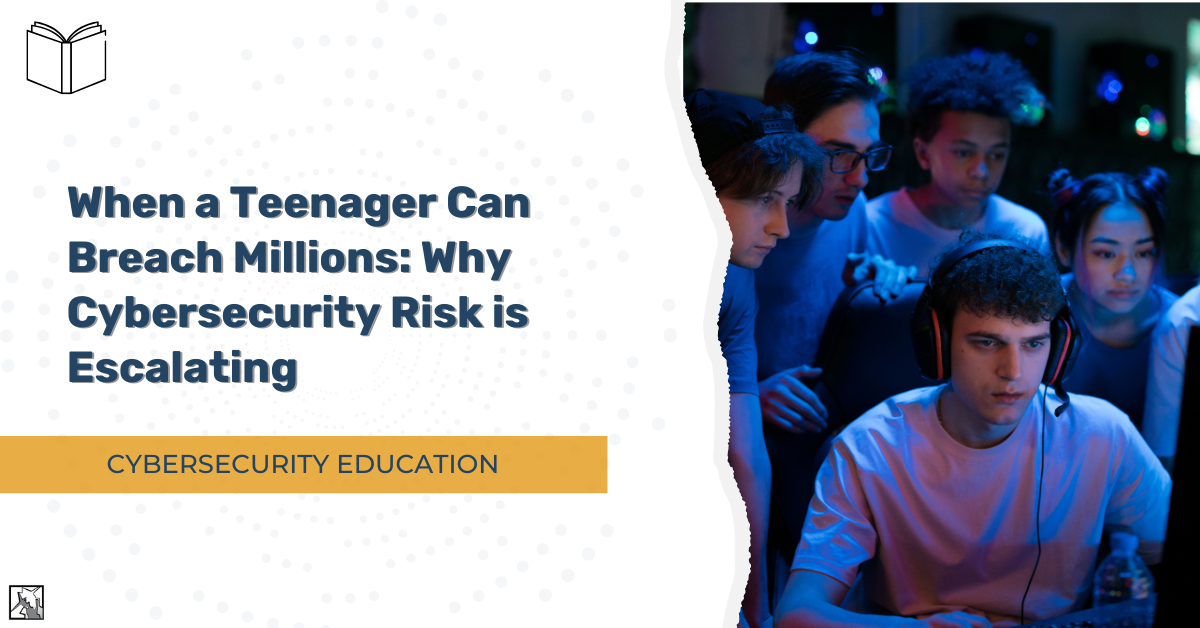
A recent story reported by ABC News offers a closer look at what this next generation of hackers actually looks like, and how quickly things can escalate.
The article follows a 20-year-old hacker who, while still a teenager, became involved in a major breach tied to PowerSchool. " The breach pierced the education technology company PowerSchool -- used by 80% of school districts in North America -- and "put at risk the security of 60 million children and 10 million teachers," the Justice Department said.” (ABC News)
What makes this story stand out is how early it started.
According to the report, the individual’s path into hacking began with time spent in online platforms and gaming communities, exposure to others experimenting with hacking techniques, and a growing curiosity that turned into hands-on learning.
Over time, that curiosity evolved into capability.
We recommend reading more on the ABC News article involving the PowerSchool breach, how much the organization paid, and the aftermath of the situation as this very scenario can happen to you and your organization.
In the PowerSchool-related breach, the attacker was able to gain access using compromised credentials, move through internal systems to locate sensitive information, and extract large amounts of data tied to students and staff.
From there, the situation followed a pattern that has become increasingly common.
The access was no longer just about exploration. It became leverage.
The attacker attempted to use the stolen data as part of a ransom-driven approach, where organizations are pressured to respond in order to limit further exposure or distribution of that data.
This reflects a broader reality across cybersecurity today. Access is often monetized, and once data is exposed, the impact can extend far beyond the initial incident.
One of the most important takeaways from this story is how quickly things can escalate for organizations.
What may start as curiosity or experimentation can evolve into real operational and business impact.
When an attacker gains access, organizations may face:
In many cases, the initial point of access is not complex. It is often something overlooked, misconfigured, or assumed to be secure.
That means the question is no longer just whether someone would target your organization.
It becomes: If someone tested your environment today, what would they find?
This story reflects a broader trend.
Many of today’s attackers are learning through online forums and chat groups, peer-to-peer knowledge sharing, and communities built around gaming and technology, with abilities to exploit code to enhance or change the experience.
These environments often introduce individuals to how systems behave under different conditions, how small changes in code can create different outcomes, and how to identify unintended behaviors and opportunities.
From there, skills develop quickly.
What starts as modifying a game or experimenting with code can evolve into understanding how authentication works, identifying weak points in applications, and learning how access can be gained and expanded.
In many cases, these individuals are not building tools from scratch. They are learning how to use, adapt, and apply tools that are already available.
That significantly shortens the learning curve and increases the number of capable attackers.
Attackers today are often opportunistic rather than highly targeted.
They scan for exposed systems, test access points, and evaluate environments without immediate detection.
This can look like:
Over time, these signals can evolve into larger issues if left unaddressed.
Many organizations operate under the assumption that their environment is secure without ever validating it against real-world behavior.
Because today, it is not just about whether an attack is coming.
It is about whether your environment has already been quietly tested.
This is where Zelvin Security comes in.
We help organizations validate their security posture through real-world penetration testing across both network and application environments.
Just as important, we make it easy to work with us.
We pride ourselves on clear and consistent communication, fast and actionable results, and a process that fits into your environment without unnecessary friction.
Look into our services we offer across the board to see how we can be a great partner for your organization.
Network Penetration Testing evaluates how your infrastructure holds up against real-world threats by identifying exposed systems and entry points, testing segmentation and internal access controls, and highlighting credential-related risks and potential lateral movement paths.
Application Penetration Testing assesses how your applications perform under real-world attack scenarios by identifying vulnerabilities that could be exploited in production, evaluating authentication and authorization controls, and providing insight aligned with common risks seen in modern applications.
Our approach is built to support your team.
You receive a clear and actionable report outlining identified vulnerabilities, prioritized findings to help focus on your biggest cyber risks first, practical remediation guidance tailored to your environment, and direct access to our team to walk through findings and next steps.
We focus on delivering results that don’t sit in a document but instead give you a clear roadmap to a stronger cybersecurity posture.
As the number of capable attackers continues to grow, staying ahead requires more than assumptions. It requires validation.
Our goal is to act as an extension of your team by providing visibility into real-world risk, supporting your remediation efforts, and helping strengthen your cybersecurity posture over time.
If you’re thinking about how this applies to your environment, now is the right time to take the next step.
👉 https://zelvin.com/contact-us
👉 https://zelvin.com
In 2025, Hertz disclosed that sensitive customer data was stolen after a third-party vendor providing file transfer services was compromised. Hertz...
2 min read
How to Efficiently Allocate Cybersecurity Funds when Budgets are tight and ai is on the rise The economy has become more reliant on digital assets...
2 min read
In the diverse landscape of cybersecurity, two distinct yet collaborative providers play pivotal roles in defending your digital space: IT Providers...